
PT Indo Rempah Lestari reported the presence of brown spot symptoms on leaf samples of vanilla plants cultivated in the company’s greenhouse area. The leaf samples exhibited brown spots on the leaf surface as well as small black dots within the leaf tissue while the leaves were still fresh. According to the plantation manager, Joko Lestari, the observed symptoms were not limited to leaf spots but also included discoloration of the leaves, which turned yellow and subsequently dried out. This condition developed more rapidly in the leaves than in the plant stems, while the position of the stems remained relatively unchanged.
The vanilla cultivation system implemented by PT Indo Rempah Lestari follows a fully organic farming method. The plants are grown inside a greenhouse using coconut coir as the planting medium and paranet shading as a protective cover. Irrigation is carried out regularly twice a week. Observations also indicated that the spread of symptoms tended to increase during periods of high rainfall intensity. Within the same plantation location, several different plant conditions were observed despite being located in the same area. Meanwhile, similar symptoms did not develop significantly in plants grown in open fields, where the ambient temperature reaches approximately 30°C, whereas temperatures inside the greenhouse can reach up to 32°C. As part of the control efforts, the plantation management has implemented the use of botanical pesticides, including spraying turmeric extract on plants showing symptoms.
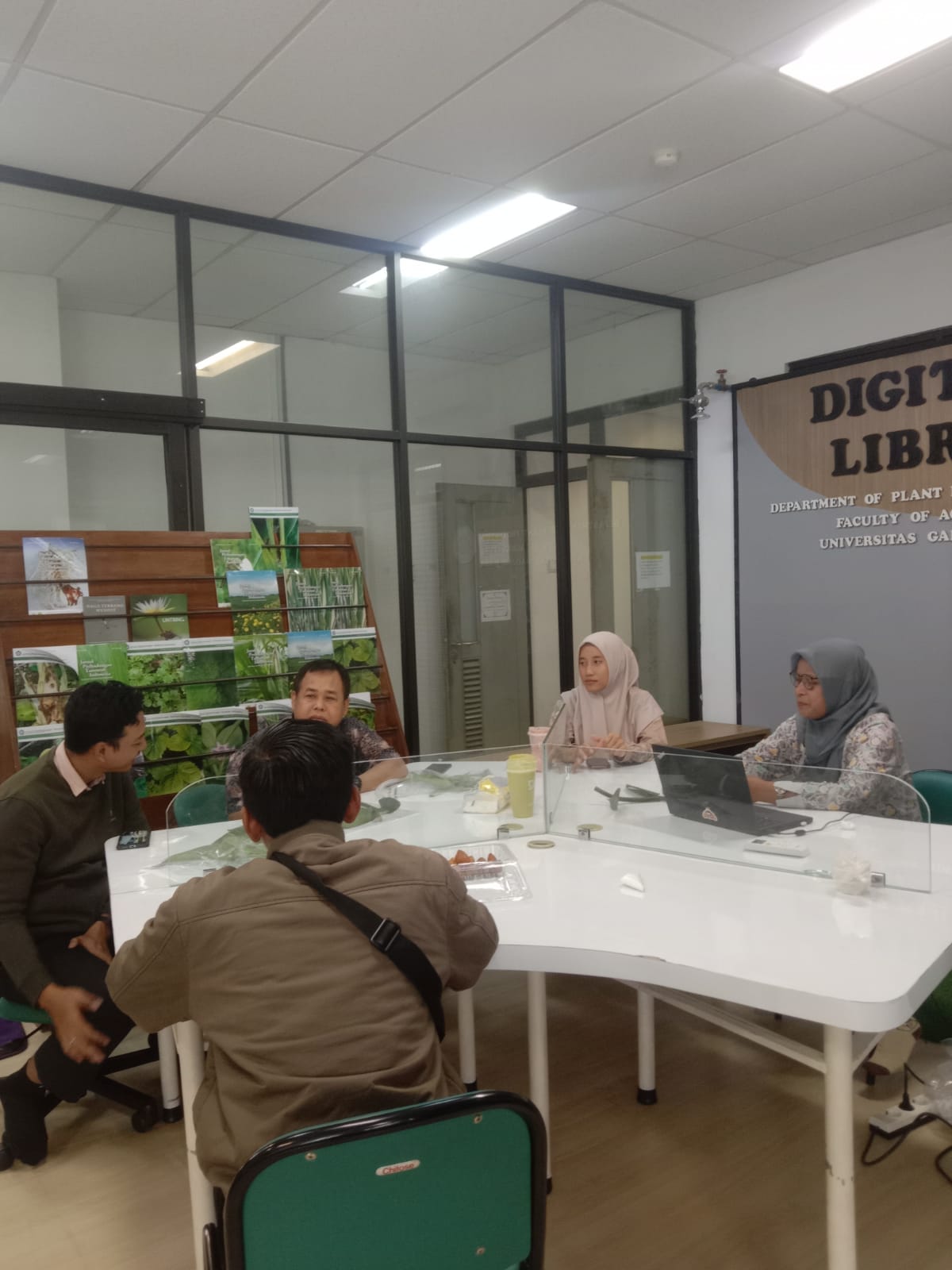
Based on these conditions, Joko Lestari submitted the plant samples for examination to the clinic services of the Department of Plant Pests and Diseases at Universitas Gadjah Mada. He also conducted consultations with faculty members from the department, namely Prof. Dr. Ir. Sedyo Hartono, M.P., and Dr. Suryanti, S.P., M.P. Information regarding the observation and analysis of the leaf samples was conveyed by Fidela Dini Rahmasari, a laboratory technician assigned in the laboratory. The results of the analysis are expected to be available approximately two to three weeks after the samples are examined. This activity aligns with the Sustainable Development Goals (SDGs), particularly Goal 2 (Zero Hunger), Goal 12 (Responsible Consumption and Production), and Goal 15 (Life on Land). Through the implementation of organic farming practices, the use of plant-based pesticides, and scientific support from academic institutions, these efforts contribute to maintaining sustainable crop productivity, protecting environmental health, and strengthening eco-friendly agricultural systems.
Tinggalkan Balasan